
Maine Mother Petitions SCOTUS To Hear “No Church” Case
Nov 19, 2026
Liberty Counsel has asked the U.S. Supreme Court to review Bickford v. Bradeen on behalf of Emily Bickford who has been barred by an unconstitutional custody order from taking her 13-year-old daughter to church and from exposing her to the Bible. Bickford, a single mother, is appealing a Maine Supreme Court decision which upheld the custody order giving sole authority to the child’s father to govern the girl’s religious activities because he objected to the mainstream biblical teachings of Calvary Chapel Greater Portland or any evangelical Christian church.
The order gives Matthew Bradeen the sole right to decide about whether his daughter may—(1) Attend “any services, gatherings, or events associated with Calvary Chapel;” (2) What “material, literature, video, or other messaging associated with or created by Calvary Chapel” she reviews; and (3) Whether she can “associate or communicate with any member” of Calvary Chapel.
The order also includes giving Bradeen to sole right govern “exposure to the teachings of any religious philosophy or of the Bible in general.”
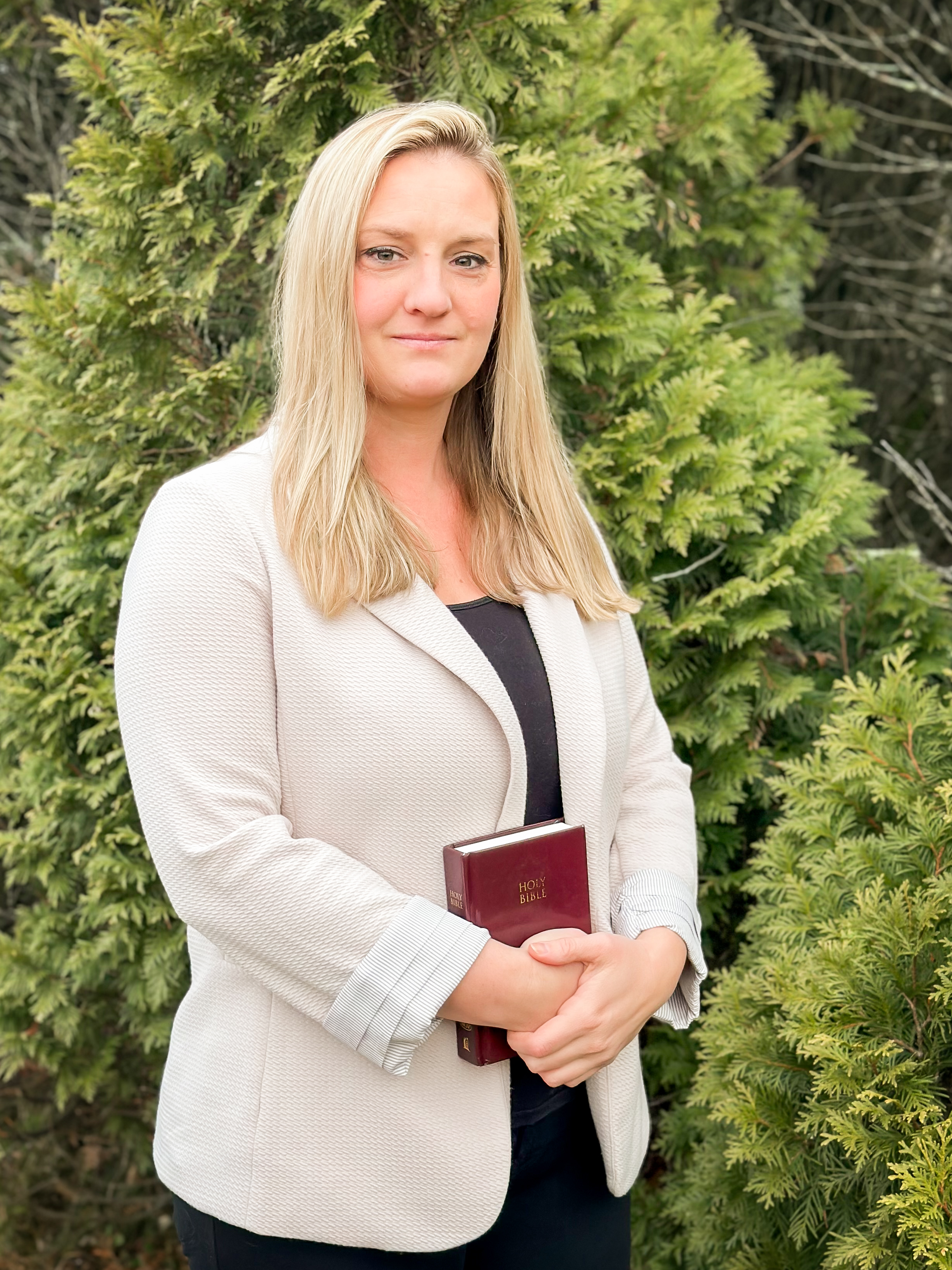 Emily Bickford
In its decision to uphold the custody order, the Maine Supreme Court set aside its own prior precedent that required proof of an “immediate and substantial threat” to a child before restricting a parent’s religious practice. The Maine Supreme Court characterized those protections as nonbinding from an earlier era and rejected the view that parental religious rights receive heightened constitutional protection in disputes between two fit parents. Its central holding was that when parents disagree about a child’s religious upbringing, courts can then allocate religious decision-making authority under a “best interest of the child” standard and displace one parent’s religious practice in favor of another. The court ruled such allocation was not a significant enough of a state intrusion on Bickford’s constitutional rights to trigger the highest scrutiny.
Until this Maine Supreme Court decision, no state high court had ever sustained a total prohibition on a fit parent’s religious exercise with her child under the best interest standard, states the petition.
“A parent’s ability to take her child to church during her own parenting time now depends on the State in which she lives,” reads the petition. “When a state court strips a fit parent of her right to direct her child’s religious upbringing and vests a co-parent with veto power, it deploys the coercive authority of the State to extinguish a fundamental right.”
If a state court may censor a fit parent’s worship with her child whenever a judge concludes that her church’s orthodox teachings fail to serve the child’s best interest, then that rule threatens every faith tradition, wrote Liberty Counsel.
Since many court precedents from the U.S. Supreme Court and other state supreme courts (Massachusetts, Mississippi, Nebraska, Ohio, Utah, and Washington) require the highest scrutiny and evidence of substantial harm before restricting a fit parent’s religious exercise with their child, Liberty Counsel presents SCOTUS with the following questions:
- Whether a state court order prohibiting a fit parent from practicing her faith with her child during her custodial time, including attending any church, religious organization or event, or even exposure to the teachings of any religious philosophy or the Bible in general, is subject to strict scrutiny under the Free Exercise and Due Process Clauses, or whether the court may subordinate a parent’s fundamental right to religious exercise to a subjective best-interests determination when the parents disagree about religion.
- Whether a custody order violates the Free Exercise Clause pursuant to Masterpiece Cakeshop v. Colorado Civil Rights Commission, 584 U.S. 617 (2018), when it prohibits a fit parent from exercising her Christian faith with her child and demonstrates disagreement at best, or hostility at worst, about Christian doctrine and viewpoints.
The petition states the Maine Supreme Court decision conflicts with previous SCOTUS precedents in Wisconsin, v. Yoder, Troxel v. Grandville, Mahmoud v. Taylor, Palmore v. Sidoti, and others which recognize strong parental rights and religious liberty protections. By forbidding a mother from taking her child to church or teaching her the Bible during her own custodial time with the contempt power of the state, the Maine Supreme Court has erred by making a subjective judgment between parental religious philosophies rather than remaining neutral and focusing on evidence of harm.
The petition asks the U.S. Supreme Court “only to determine the correct constitutional standard” and to “grant review to set things right.”
Liberty Counsel Founder and Chairman Mat Staver said, “The Maine Supreme Court decision bars a fit parent from teaching her daughter her Christian faith or exposing her to any religious philosophy or the Bible in general. The decision abandons the constitutional safeguards that protect parental rights and religious liberty. If left uncorrected, this ruling threatens far more than a mother and daughter’s rights because it creates a precedent under which courts may suppress religious expression in a parent-child relationship without satisfying the highest scrutiny typically required in such cases. The Supreme Court has the chance to correct this injustice and determine fit parents retain the fundamental right to share their faith with their child even when the other parent disagrees.”
Liberty Counsel advances religious liberty, the sanctity of human life, and the family through litigation and education. We depend on your support, which enables us to represent people at no cost. Click here to GIVE NOW.

TAKE ACTION


Post Office Box 540774
Orlando, FL 32854
(407) 875-1776
Contact: LEGAL HELP
Contact: Other Issue/Question
Name
Choose Password
SIGN UP TO STAY INFORMED!
Liberty Counsel is a 501(c)(3), tax-exempt nonprofit organization. Contributions are tax-deductible to the extent permitted by law.
View our Privacy Policy.
©Copyright 1995 - present. All Rights Reserved.


