
“Adulterated” COVID Shots Need To Be Recalled
Oct 25, 2023
After three years of drug manufacturers and regulatory agencies insisting the COVID shots were safe, study findings by independent scientists now show that certain modified mRNA shots may meet or exceed regulatory standards for “adulteration” with DNA fragments. Further, in the case of the Pfizer/BioNTech product, these fragments appear to include DNA of a particular sequence (SV40 origin-enhancer-promoter) which is biologically active in animal cells. The presence of SV40-derived DNA fragments was not fully disclosed by the manufacturers to regulatory authorities. The study’s findings have been replicated by other scientists prompting several international medical organizations to call for the immediate recall of all COVID shots.
These findings also raise serious questions about how these fragments and specific DNA sequences escaped regulatory consideration, and why the presence and risks of significant amounts of SV40- and bacterial-derived small DNA fragments were not discussed by the manufacturers in documents submitted to regulators. Last week, Canada’s public health authority confirmed that residual DNA fragments were found in Pfizer’s mRNA COVID shot. Furthermore, Health Canada indicated that Pfizer did not disclose the identity of the specific SV40-derived replication origin-enhancer-promoter DNA sequence when filing for the product’s government approval. Despite acknowledging the presence of the fragments, Health Canada stated they continue to support the use of the COVID injections.
In the verified study published in April 2023, four Massachusetts-based researchers discovered the presence of parts of the DNA sequence known as the Simian Virus 40 (SV40) origin-enhancer-promoter, which has long been used in experimental gene therapy research. These sequences are often used to create synthetic recombinant DNA circles (“plasmids”) which can both replicate and produce antibiotic resistance proteins in bacterial and animal cells. To be clear, this study and the replicated studies have not found either full-length SV40 DNA, SV40 virus, or the cancer-associated SV40 “Large T antigen” sequences among the contaminants.
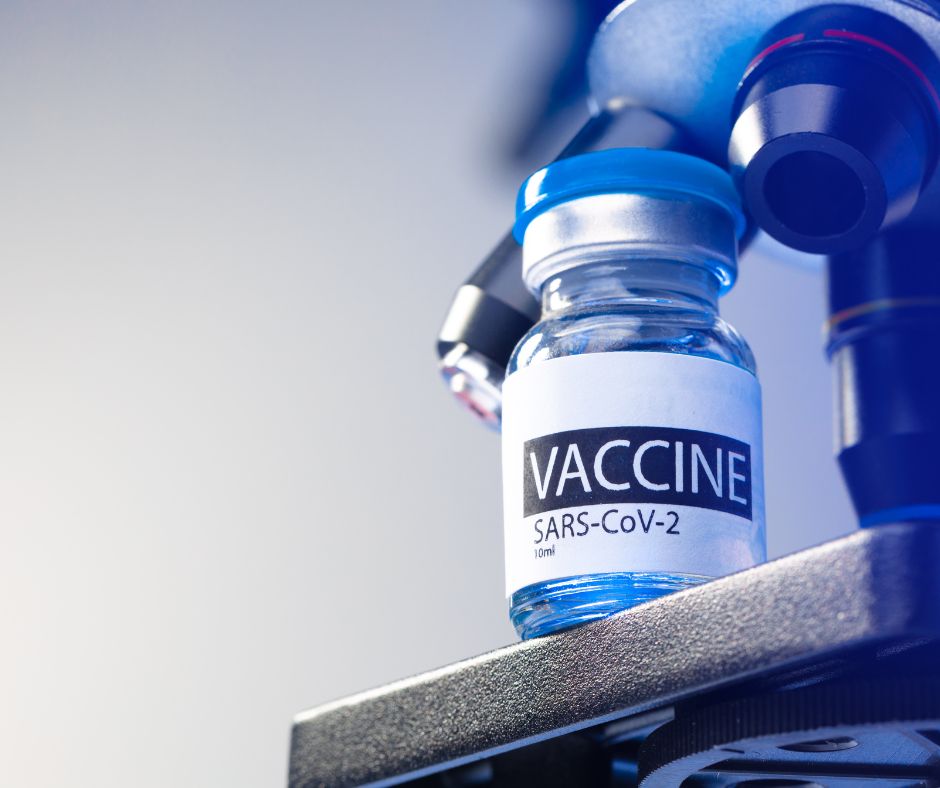
In manufacturing the mRNA COVID shot, bacterial-produced circular DNAs are used as the template to make the modified mRNA, which after purification can be delivered to instruct human cells to make spike proteins. By the end of the manufacturing process, all residual DNA sequences are supposed to be degraded and “cleaned out,” leaving pure modified mRNA for injection.
However, a key study has revealed the residual plasmid DNA within the modified mRNA products appears to exceed limits established by the U.S. Food and Drug Administration (FDA) and the European Medicines Agency (EMA). Microbiologist Kevin McKernan, lead author of the study and former researcher for the Massachusetts Institute of Technology Human Genome Project, wrote that the residual DNA exceeded the EMA’s DNA to RNA ratio limit by “18-70 fold.” Conversely, the researchers found the fragments only slightly exceeded the FDA’s standard of 10 nanograms per dose by two nanograms (12ng/dose).
In both the EMA and FDA guidance, these limits were established for general DNA contamination of all pharmaceutical products. However, the guidance does not address products specifically designed to deliver RNA, DNA, and DNA fragments efficiently and non-specifically into cells or tissues, which will greatly increase the genetic risks (“genotoxicity”) of DNA contaminants. Thus, the data supporting the safety of the standard limits is not relevant to products employing lipid nanoparticles engineered to efficiently deliver DNA or modified mRNA into cells, tissues, or a fetus. In experimental animal models, prior peer-reviewed research demonstrates that similar DNA fragments can “integrate” into the genome, may present a cancer risk, and can be used to modify the genome of cells and embryos.
McKernan also cautioned that DNA from the plasmids could “integrate” into the human genome potentially causing genes not to function properly which could lead to cancer, mutations, birth defects, or other adverse side effects. He further stated that the fragments of the SV40 origin-enhancer-promotor sequence found in the Pfizer COVID shot was “considered to be the non-functional part” (in terms of efficient tumor promotion) of the sequence. Nevertheless, Pfizer did not disclose, “annotate,” nor discuss potential risks involved in its use or presence. This specific sequence, while not the main source of SV40 tumor-promotion activity, is biologically active in animal cells, can trigger non-natural DNA replication, and functions as a genetic switch for turning on mRNA production in animal cells.
McKernan’s findings were replicated by other scientists. Dr. Phillip Buckhaults, director of the Cancer Genetics Lab at the University of South Carolina, posted several of his findings showing up to “2.5 billion molecules of plasmid and about 100-200 billion pieces of plasmid DNA identified” in the sequence resulting in “a lot of chances for DNA to transfect and integrate.” However, Dr. Buckhaults also downplayed the cancer risk stating that the presence of the SV40 origin-enhancer-promoter sequence in the shots is not the whole SV40 DNA sequence but rather just “a piece” of it.
A third study by virologist Dr. David Speicher, immunologist and biochemist Dr. Jessica Rose, experimental pathologist Dr. David Wiseman, as well as McKernan, studied an additional 27 vials of the COVID modified mRNA products. These researchers found residual DNA exceeding the FDA’s and World Health Organization’s DNA to RNA ratio limit of 10ng per dose by “188-509 fold.” Dr. Rose stated they found less DNA fragments in Moderna’s shot noting they “cleaned out their DNA better,” but she concluded the presence of residual DNA is “an ongoing problem” for manufacturers.
Due to the findings, the World Council for Health and the Association of American Physicians and Surgeons call for the COVID-19 shots to be recalled and all mRNA injections to be stopped worldwide.
Health Canada has stated that Pfizer “did not specifically identify the SV40 sequence” in the DNA plasmid they submitted during the shot’s approval process. They further noted that only after McKernan and Dr. Buckhaults publicly released their findings that “it was possible for Health Canada to confirm the presence” of these partial SV40 DNA sequences by comparing those published findings with the data Pfizer submitted.
Last week, Dr. Maryanne Demasi, a medical researcher and former investigative journalist for Australia Broadcasting Corporation, presented the contamination findings to the FDA. According to Demasi, the FDA did not “acknowledge the problem of contamination” nor did it answer specific questions. Rather, the FDA stated mRNA COVID shots “are not defined as a gene therapy” and the FDA “is confident in their quality, safety and effectiveness.”
After carefully examining the FDA guidance and federal law, Dr. Robert Malone, inventor of the mRNA platform, concluded that the presence of DNA fragments in the COVID modified mRNA products appears to violate federal law, and appears to meet the “formal criteria of pharmaceutical ‘adulteration.’”
“Adulteration” is a regulatory term used in Title 21 of the U.S. Code § 351. According to the U.S. Code, a drug is considered adulterated when it is not “administered in conformity with current good manufacturing practice” consistent with the product’s purported “quality and purity characteristics.”
Dr. Malone noted that these findings, when considered together with current long-term safety data from worldwide databases, demonstrate that the shots represent a significant short- and long-term health risk. He further advocated that if the manufacturers do not voluntarily recall their products that all 50 state Attorneys General should consider seizing the remaining stock based on current statutes and FDA guidance concerning adulteration of drug products.
Traditionally, vaccine manufacturers in the U.S have had a liability shield known as the Public Readiness and Emergency Preparedness (PREP) Act. The PREP Act protects manufacturers and distributors with immunity from ”any claim of loss” resulting from the manufacture and administration of medical countermeasures, except in cases of “willful misconduct.” On May 29, 2023, the U.S. Department for Health and Human Services amended regulations under the PREP Act to protect COVID-19 medical countermeasures until at least Dec. 31, 2024.
Yet on July 12, 2023, a Michigan judge issued a first of its kind ruling that a drug manufacturer was not protected by the PREP Act. The case involves a lawsuit against Gilead Sciences, the maker of the COVID-19 medication Remdesivir. In December 2021, the company recalled 55,000 vials of the drug that were found to be contaminated with glass particles. The lawsuit alleges the drug caused a patient to have two strokes and a leg amputation. The suit also cites numerous documents, public statements, and press releases that Gilead Sciences demonstrated “a pattern of downplaying or omitting altogether the clinical dangers experienced by patients from remdesivir use...”
Circuit Court Judge Carol Kuhnke wrote, “…the government, I don't believe, sought to protect a negligent manufacture of the product. And when the product has some contaminant in it, it is not meeting the requirements to avail itself of the PREP Act. It is no longer a covered countermeasure.”
The judge’s decision allows the case to proceed to trial. In addition, the Michigan ruling provides a new precedent for attorneys to file class action lawsuits on behalf of COVID-19 countermeasure victims.
Liberty Counsel Founder and Chairman Mat Staver said, “These scientific findings either suggest wholesale incompetence of drug manufacturers and regulatory agencies or they demonstrate unlawful collusion and fraud between these organizations. Independent scientists have done an incredible service exposing the truth behind these injections and drug companies and administrators now need to be concerned about answering for their unlawful actions in court. Drug manufacturers have no legal immunity for fraud or willful misconduct.”
This article was updated on October 31, 2023, to clarify technical aspects of the study findings and mRNA production.
Liberty Counsel advances religious liberty, the sanctity of human life, and the family through litigation and education. We depend on your support, which enables us to represent people at no cost. Click here to GIVE NOW.

TAKE ACTION


Post Office Box 540774
Orlando, FL 32854
(407) 875-1776
Contact: LEGAL HELP
Contact: Other Issue/Question
Name
Choose Password
SIGN UP TO STAY INFORMED!
Liberty Counsel is a 501(c)(3), tax-exempt nonprofit organization. Contributions are tax-deductible to the extent permitted by law.
View our Privacy Policy.
©Copyright 1995 - present. All Rights Reserved.


