
Federal Appeal Challenges Judge’s Order That Shut Down Church Services
Jun 16, 2026
Liberty Counsel filed an appeal to the Eleventh Circuit Court of Appeals on behalf of congregants of a Florida church in a lawsuit against a state court judge who banned religious “assembly” on the church’s own property. The case, Tipton v. Upchurch, seeks the Eleventh Circuit to reverse a lower U.S. District court decision and grant a federal injunction against the state-court order to stop the First Amendment violation of the congregants’ right to gather for religious worship at their church.
The lawsuit involves Coastal Family Church in Flagler Beach, Florida, and names the Honorable Sandra Upchurch in her official capacity as judge for the Circuit Court of the Seventh Judicial Circuit as the defendant.
Since January 2026, Judge Upchurch’s order has forced the church to cancel regular Sunday services, Bible studies, prayer groups, a memorial service, a wedding event, ministry meetings, and more. The appeal states that congregants, who are non-parties to the injunction yet are directly affected by it, cannot gather for religious purposes without church leaders being held in contempt and have no other remedy.
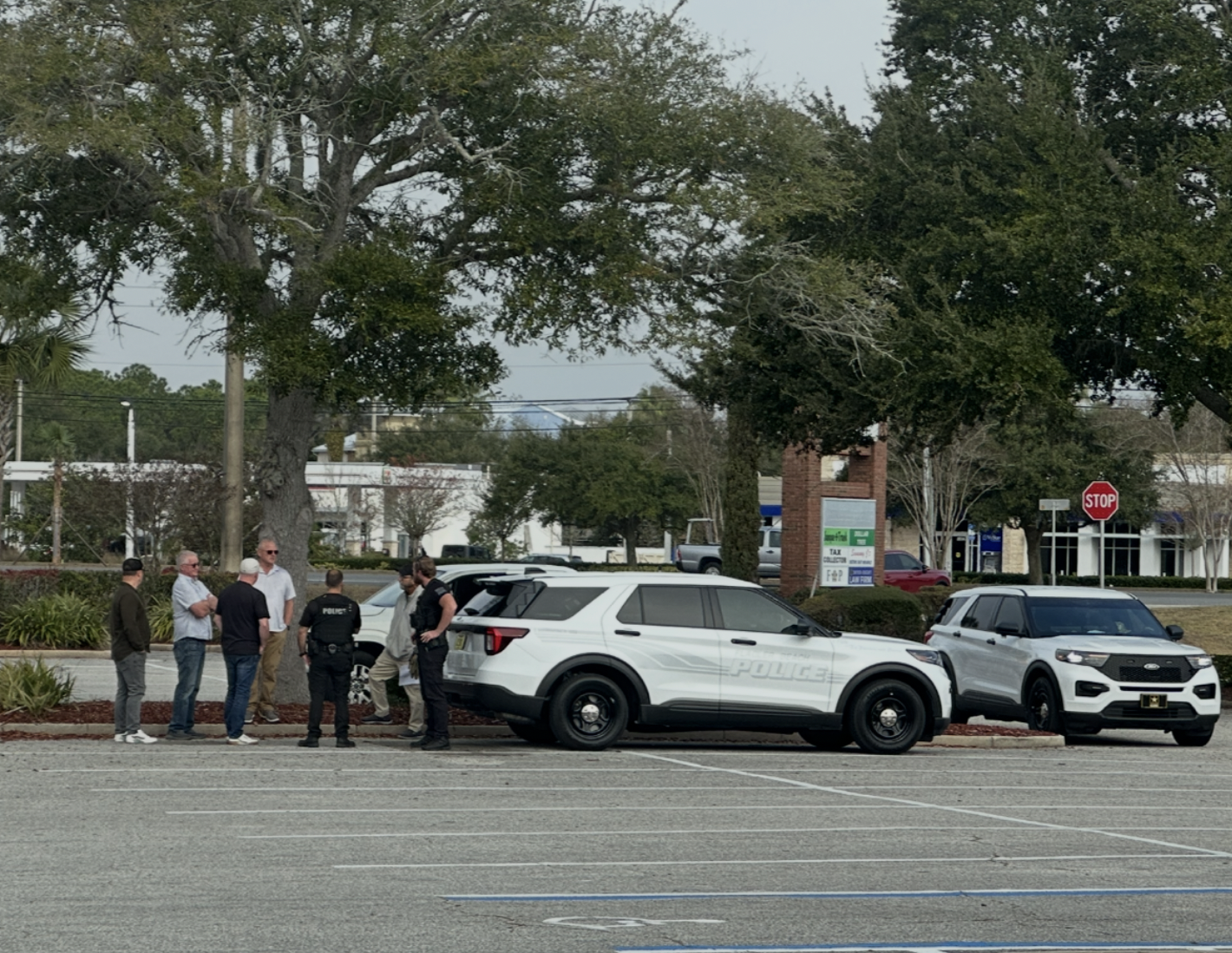
Flagler Beach police confirm with Coastal Family Church leaders on Sunday, January 25, 2026, that no in-person worship services are being held in accordance with the injunction.
The central issue of the case asks a fundamental constitutional question:
- Can a federal court intervene to stop a state judge’s order when that order infringes on First Amendment Free Exercise rights of non-parties and no other meaningful remedy is available?
While the lower federal court suggested a declaratory judgment might be enough, Liberty Counsel argues a declaration alone would not stop the enforcement of the state-court order or eliminate the risk of contempt. Only a federal injunction effectively blocking state action is the remedy here that can restore Coastal Family Church’s constitutional Free Exercise rights, reads the appeal.
The church, located in the Flagler Square strip mall, has been sued by its property association, Flagler Square – JAX, Inc., over alleged parking congestion and a condominium covenant that the association interprets as prohibiting “public assembly.” Congregants argue that by blocking all “public assembly” for religious activities at the church, Judge Upchurch’s order operates as an unconstitutional “prior restraint,” meaning it blocks protected religious speech and assembly before it takes place. The appeal also notes that the condominium association permits “public assembly” among the other tenants of the strip mall, including bingo nights, flea markets, cars shows, and more. Prohibiting Coastal Family Church from gathering “singles out religion” in favor of secular activities in violation of the Establishment Clause, states the appeal.
“As a result of the state-court injunction—backed by the overwhelming power of contempt—the doors of Appellants’ church are shuttered, the lights are dim, and the eternal flame of the Appellants’ religious beliefs temporarily snuffed out,” wrote Liberty Counsel. “Appellants’ ministry to the most vulnerable in the community is prohibited. Appellants’ communal obedience to Scripture’s command to not forsake the assembly of themselves together is outlawed. And Appellants’ religious worship services banned. This is unacceptable under the First Amendment.”
Currently, two cases are proceeding simultaneously to reverse the unconstitutional order. In Tipton, the congregants are the plaintiffs whose only avenue of relief is the federal court since they are not named in the order itself yet are suffering from its adverse effects. In separate state court proceedings in Palmer v. Flagler Square-JAX, Inc., the plaintiff is Coastal Family Church Pastor Roderick Palmer who is named in the order and is directly appealing it in the state court of Florida’s Fifth District Court of Appeal.
Liberty Counsel Founder and Chairman Mat Staver said, “Each day that passes, the congregants have lost their free exercise of religion to assemble for worship. The congregants, who are lawful invitees, may meet for secular or administrative purposes but not for religious purposes. The state court order permits their assembly for secular but not for religious purposes. These individuals have no idea if a prayer to begin a meeting for administrative purposes transforms the supposed secular meeting into a religious meeting. The order does not give clear guidance and violates their First Amendment rights.”
Liberty Counsel advances religious liberty, the sanctity of human life, and the family through litigation and education. We depend on your support, which enables us to represent people at no cost. Click here to GIVE NOW.

TAKE ACTION


Post Office Box 540774
Orlando, FL 32854
(407) 875-1776
Contact: LEGAL HELP
Contact: Other Issue/Question
Name
Choose Password
SIGN UP TO STAY INFORMED!
Liberty Counsel is a 501(c)(3), tax-exempt nonprofit organization. Contributions are tax-deductible to the extent permitted by law.
View our Privacy Policy.
©Copyright 1995 - present. All Rights Reserved.


